A podcast producer is the person responsible for getting every episode made, finished and in front of listeners. The host brings the voice, the ideas and often the guests. The producer handles nearly everything else: planning, recording, editing, publishing and promotion.
Spotify's guide for creators describes the role in much the same way, covering creative direction, technical production, content strategy, audience development and sponsorship (Spotify for Creators). On a small show one person does all of it. On a large one it is a team.
Before the recording
Most of a producer's best work happens before anyone sits down at a microphone.
- Shaping the show. Format, length, tone and the running order of a typical episode, so each one feels like part of the same show.
- Planning episodes. A calendar of topics that serves the host's goals, whether that is winning clients, selling a book or building a following.
- Booking and briefing guests. Inviting them, scheduling them, sending a short brief and checking their microphone or setting up for an in-person visit.
- Research and questions. A few pages of notes so the host can have a real conversation rather than read from a script.
On the day
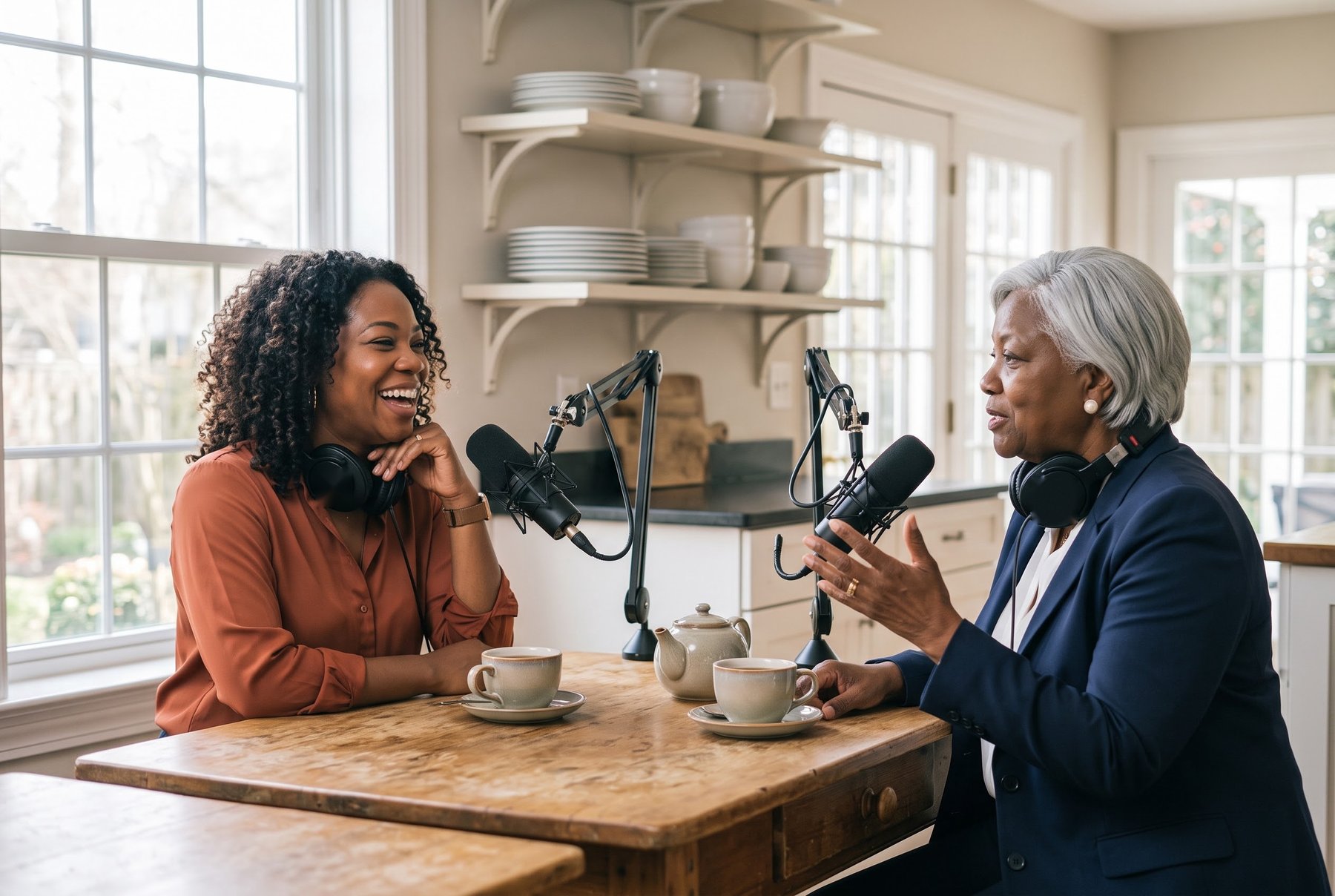
The producer runs the session so the host can concentrate on the conversation. That means setting up microphones and, for video, cameras and lighting; checking levels; keeping an eye on time; and noting good moments for clips. With remote guests, it means getting clean audio from someone else's home office. A producer who records you at your own home or office brings the gear and takes it away again.
After the recording
This is the part most people picture, and it is a lot of work per episode.
- Editing. Removing false starts and long pauses, balancing voices, adding the intro and theme music. For video, cutting between cameras and making the episode pleasant to watch, not just listen to.
- Show notes and transcripts. A written summary, links to anything mentioned and a full transcript, so the episode can be found by search engines.
- Artwork and thumbnails. Episode art for the listening apps and a clear thumbnail for YouTube.
- Chapters. Time markers that let listeners jump to the part they want. YouTube has specific rules for these: at least three, starting at 00:00.
Publishing everywhere
The producer uploads each episode to the podcast host, which feeds Apple Podcasts and Spotify, and publishes it on YouTube. Each platform has its own requirements; Apple, for example, sets rules for the RSS feed and for show artwork. YouTube matters more each year: in Edison Research's Q3 2026 data, 40% of U.S. weekly podcast consumers named it the service they use most often for podcasts. We cover that shift in Is YouTube the biggest podcast platform now?
Growing the audience
A finished episode only matters if people hear it. A producer turns each one into short clips, YouTube Shorts and quote cards, writes the email to your list and updates the show's website. Over time they read the numbers from each platform and suggest what to do more of. Some also help with sponsorship: what to offer, what to charge and how to pitch it.
What a good producer leaves you to do
Prepare, show up and talk. If you find yourself chasing guests, fixing audio or remembering to post, the producer is not doing the job. If you are weighing whether to hire one at all, read Should you hire a podcast production company or do it yourself?
Where Bay House fits
We are podcast producers for people whose show serves a practice, a book or a cause. We record at your home or office or with remote guests, and we handle everything above. The Show Starter, from $5,000, sets up the show on every platform including YouTube and delivers your first three episodes and a one-page website. Show Production, from $2,000 a month, covers four episodes with editing, show notes, transcripts, thumbnails, chapters and clips. Full Studio, from $4,500 a month, adds filmed video episodes and marketing. See our pricing; every show ends in a fixed-price proposal.
Common questions
Is a podcast producer the same as an editor?
No. An editor works on the recording after it is made. A producer is responsible for the whole episode, from the idea and the guest to publishing and promotion, and often edits as well.
What does an executive producer do on a podcast?
The title varies by show. Usually it means the person who owns the show's direction and budget, often the host or the client, while the producer runs the day-to-day work.
Does a video podcast need a different producer?
It needs video skills: lighting, framing, cameras and editing for watching. Many producers now handle both, but ask to see filmed episodes before you hire.