Buying waterfront property: what to check
Before you sign, make sure the pier, the access and the shoreline are what you think they are.
Related practice: Waterfront & riparian rights
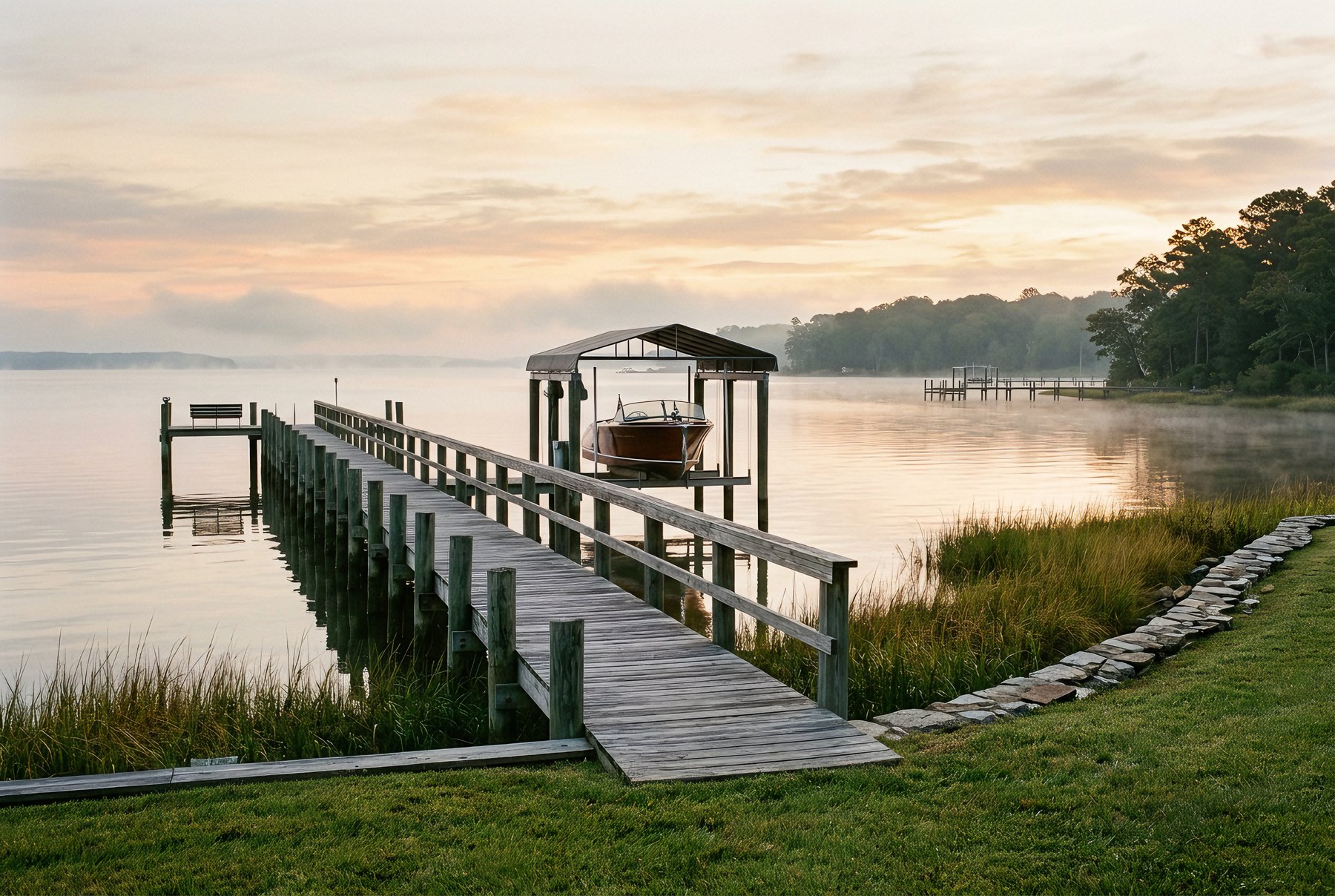
The pier
Ask the seller for the permits for the pier, boat lift and any shoreline work. A structure built without approval, or larger than approved, can become the new owner’s problem.
Check whether the pier is entirely within the property’s riparian area. On a curving shoreline, the lines can run at surprising angles.
Access to the water
If your access runs across a community lot or a path, read the easement or covenant that grants it. Community piers and slips are often governed by association rules that can change.
The shoreline
Erosion, bulkheads and living shorelines all have rules of their own. Ask what work has been done, and whether further work is planned or required.
The title commitment
Read the exceptions in the title commitment carefully. Easements for utilities, access or drainage near the water can limit what you can build. Ask your title company or lawyer to explain each one before closing.
When to call a lawyer
Call before you are committed: during the contract’s study period, or before you waive a contingency. Problems are cheaper to solve before closing than after.
General information, not legal advice. Every situation is different, and deadlines can matter. If this guide describes your situation, talk to a lawyer early.